R&D case studyVR / 3DEKbana
Prototyping a metaverse businesses could actually rent space in.
An EKbana R&D project born out of the COVID lockdowns — a multiplayer VR world where businesses could rent virtual exhibition halls and concert venues. I worked as both product designer and 3D artist across a 5-person team.
Challenge
COVID lockdowns made physically showcasing products or hosting events impossible — a real problem for small and large businesses with no way to demonstrate value in person.
My role
Product Designer & 3D Artist on a 5-person R&D team — owned the UX process end-to-end and built environment art in Cinema 4D and Substance Painter.
Outcome
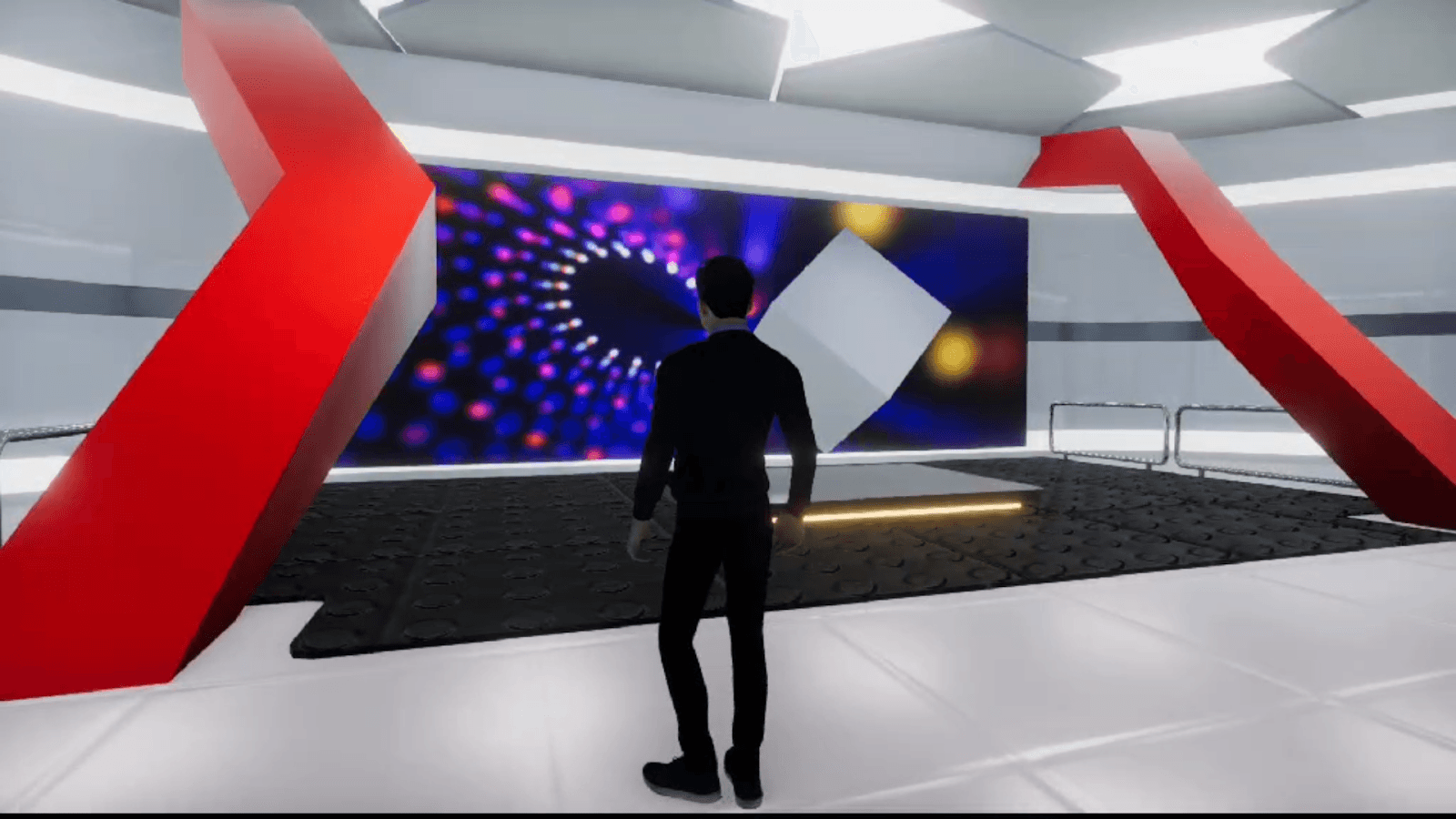
A working multiplayer VR prototype in Unity — exhibition halls, a 1,000+ capacity concert venue, portal navigation, voice and text chat — proven out as an internal demo.
Context
A blockchain company's bet on the metaverse.
EKbana had already built crypto wallet and blockchain products by the time the pandemic hit. When Facebook renamed itself Meta in October 2021 and announced $10 billion in metaverse investment, the timing lined up with a problem we'd already seen up close: businesses couldn't hold events, run exhibitions, or showcase products in person anymore.
We formed a 5-person team to explore whether a virtual world could actually solve that — not just look impressive in a demo reel. We landed on virtual exhibitions and events as the wedge: a space businesses could rent, with a longer-term vision of adding parks, concert venues, and more as the idea proved out.
Process
From a Q&A framework to a working build.
Framing the MVP with a Five Ws exercise.
Rather than guessing at scope, we ran a structured Five Ws and How process to define exactly what an MVP virtual exhibition needed, before any pixel or polygon.
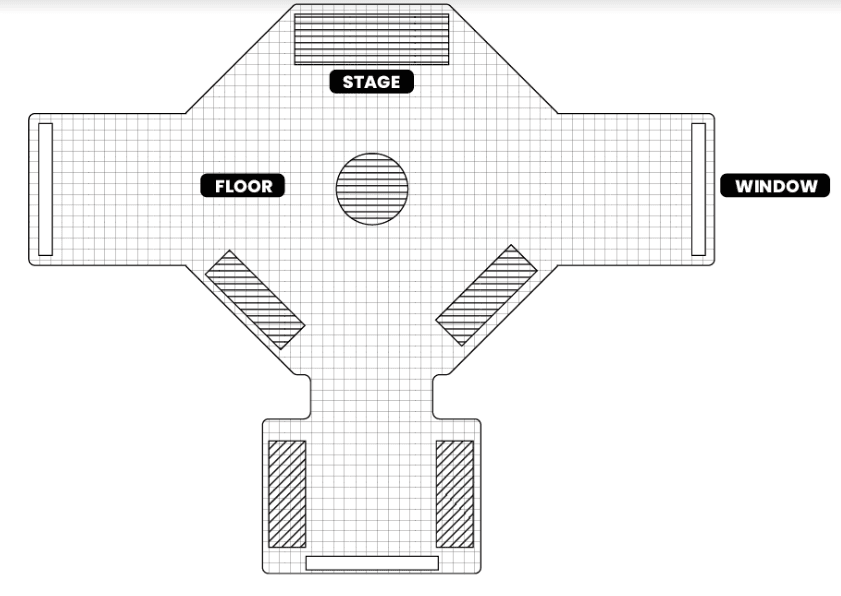
The exhibition hall floor plan, sketched in Illustrator before any 3D work began.
Sketch to greybox, fast.
Ideas moved from pen-and-paper sketches straight into Unity greyboxing — testing scale, navigation, and flow in 3D before investing in final art.
Full-fidelity environments, not just blockouts.
Once the layout worked, I modeled the environments in Cinema 4D and textured them in Substance Painter and Photoshop — turning a greybox into a space that felt real enough to hold an event in.
What we built
A social platform, not just a 3D showroom.
Multiplayer exploration
Join a shared server and move through the world alongside other avatars, with navigation inspired by Decentraland and open-world games.
Portals between spaces
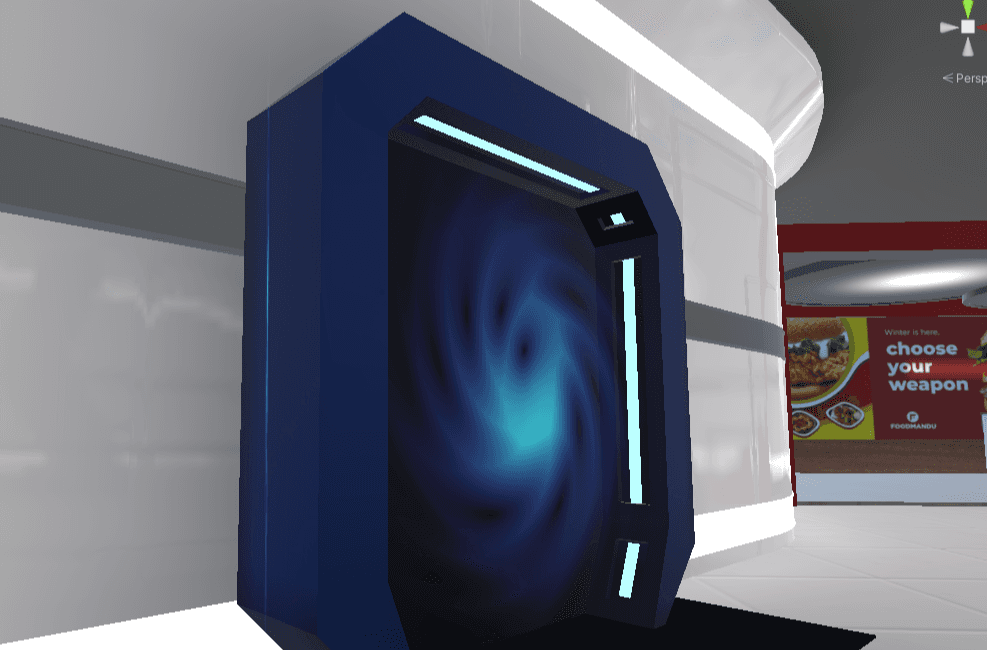
Sci-fi-styled portal gates with a swirl transition move users between the exhibition hall, concert venue, and outdoor scene without breaking immersion.
Group chat & voice call
Text and voice communication built in, so the space functioned as a real social platform, not just a static 3D showroom.
In-world commerce
Products showcased inside the exhibition hall could be browsed and purchased directly within the virtual interface.
A closer look
Three spaces, one connected world.
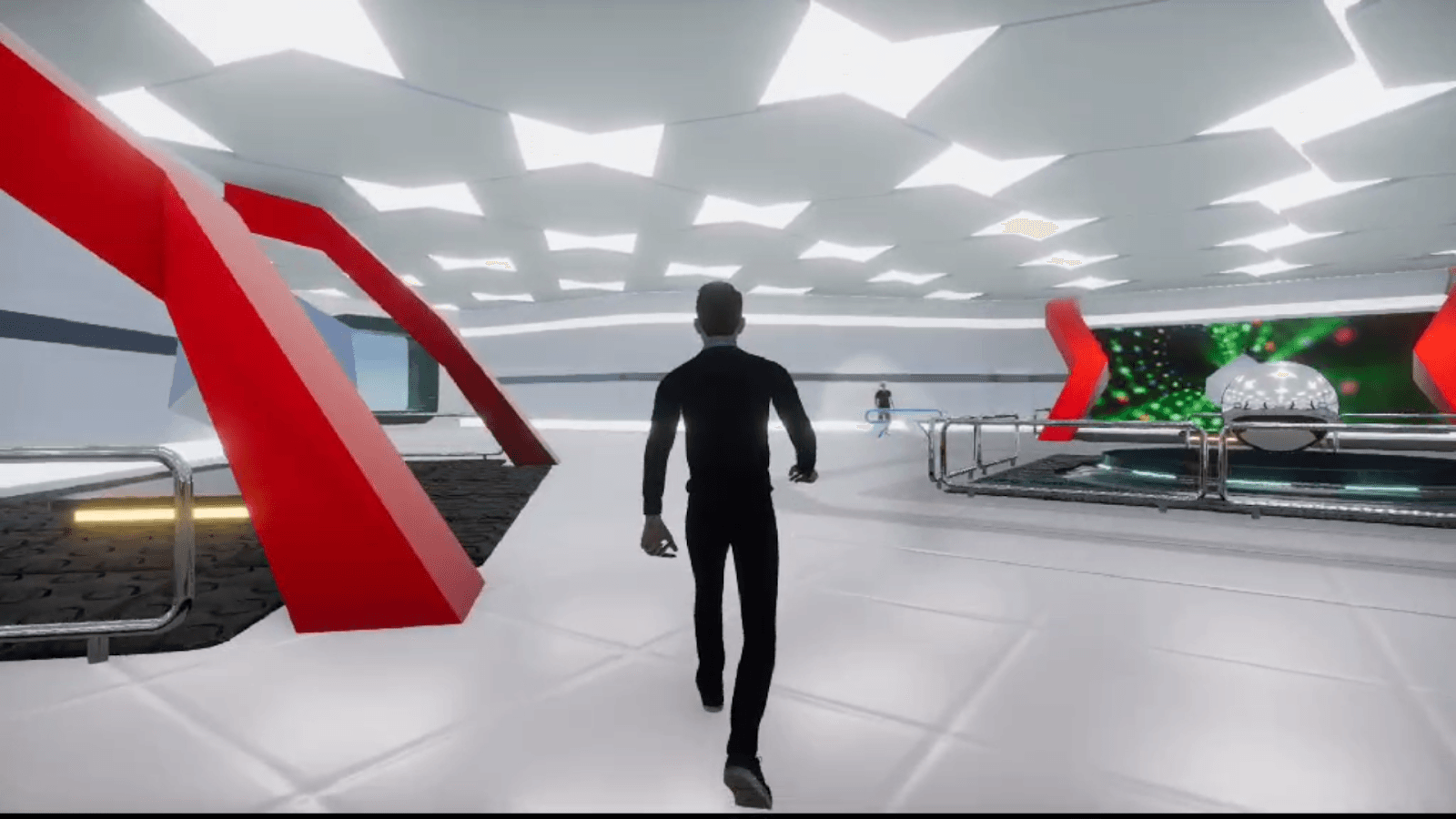
Rentable booths for real businesses.
The common ground of the prototype — booths businesses could rent to showcase products, with in-world browsing and purchase built in.
A stage, a balcony, and room for a crowd.
A large stage with an LCD screen, a balcony reached by an automated lift, and enough space for 1,000+ people to move freely — built for concerts, events, and movie premieres.
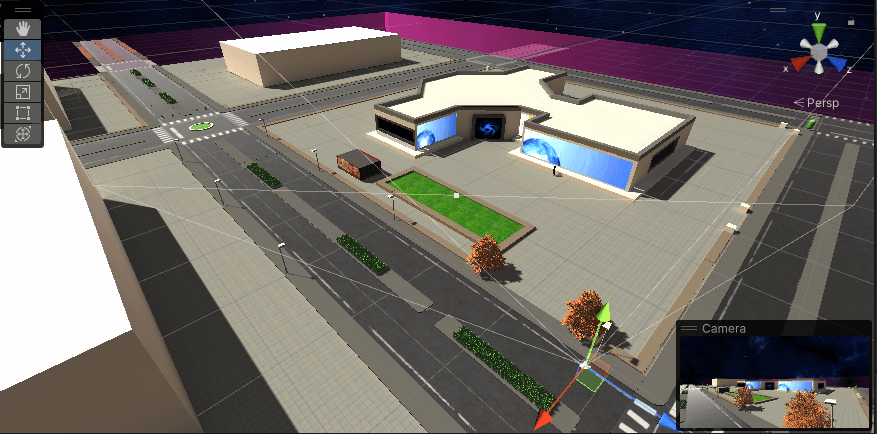
A city to connect the rest.
An outdoor city scene with a park, linking the exhibition hall and concert venue into one world — the shell for whatever we added next.
Outcome
What the prototype proved.
A working build, not just a concept deck.
A playable multiplayer prototype in Unity — proving the idea with something people could actually walk through, not a rendering.
A venue built to hold a real crowd.
A concert hall designed for 1,000+ concurrent users, with automated lift and stairs navigation to a balcony level.
Two disciplines, one deliverable.
Full ownership across UX/product design and hands-on 3D art — research, prototyping, and environment modeling on the same project.
A proof-of-concept, honestly labeled.
Concluded as an internal demo rather than a public launch — it did what R&D is supposed to do: answer the question before betting more on it.
Reflection
Not every prototype has to ship to be worth building.
Working across product design and 3D art on the same project forced a kind of discipline I hadn't needed before — a feature only mattered once it existed in the space, not just on a whiteboard. Nepverse never went public, and that's fine: its job was to answer whether the idea worked at all, and it did that clearly enough to be worth the year it took.